

Sea Falcon

DISCOVER THE ALL-NEW
The freedom to land where others only dream.
Clean. Capable. Beautifully engineered.
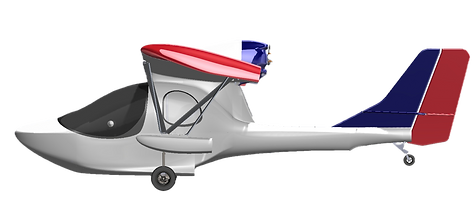
Developed by Airtech, the Sea Falcon combines modern composite construction, electrically actuated landing gear, advanced aerodynamic design, and the proven reliability of the Rotax 912 platform into an aircraft built for pure freedom.
Water or runway, adventure now feels effortless.


Easy to operate.
Easy to enjoy.
From its responsive handling and modern avionics suite to its electrically actuated landing gear and proven Rotax powerplant, every detail was engineered to reduce complexity and maximize confidence.
Because the best adventures begin when flying feels effortless.
Sea Falcon: Performance Numbers
SeaFalcon vs. Competition in the Amphibious LSA Segment
Data extracted from official POHs. SeaFalcon figures are preliminary design targets.

Not just different. Engineered differently.
Below are the 12 defining innovations behind the SeaFalcon — a next-generation amphibious LSA engineered around modern aerodynamics, intelligent systems, real-world maintainability, and the evolving MOSAIC era. Every feature was designed with purpose: to simplify operation, enhance safety, improve performance, and redefine what pilots should expect from an amphibious aircraft.
1. One Lever. One Mission.
Single-Lever Variable-Pitch Propeller
The SeaFalcon is the first amphibious LSA engineered around a true single-lever variable-pitch propeller system for the MOSAIC era. Most aircraft in this category still rely on ground-adjustable propellers — fixed before takeoff, compromised for the entire flight. SeaFalcon changes that. The DUC HYBRIDE propeller and Flybox ADV+ controller work together automatically, optimizing performance from water takeoff to cruise. Shorter takeoffs. Lower cruise RPM. Faster response. Less workload. The pilot makes one decision: power. The airplane manages the rest. This is not retrofitted technology. It was designed into the airplane from day one.
2. Five Modules. One Vision.
Modular 5-Section Panel Architecture
The SeaFalcon features the only fully modular avionics panel architecture in its class.
Every function — ignition, flight, nav/com, engine, and accessories — lives in its own dedicated module. That means avionics upgrades no longer require dismantling the airplane. GPS swap? Future glass panel? New radios? Done in minutes instead of days. It reduces maintenance costs, improves resale value, and future-proofs the aircraft for the rapidly evolving MOSAIC environment. It’s not just cleaner engineering. It’s smarter ownership.
.jpeg)
.jpeg)
.jpeg)
3. Stronger by Process.
Vacuum-Infused Composite Hull
The hull is built using vacuum-infusion composite manufacturing — a process rarely seen in this category.
Composite material alone is no longer enough. What matters is how it’s made. Vacuum infusion delivers superior fiber-to-resin consistency, reducing voids while increasing structural integrity. The result is a hull that is lighter, stronger, and more repeatable from aircraft to aircraft. Hydrodynamically efficient on the water. Aerodynamically clean in the air. It’s industrial-grade manufacturing brought into the amphibious LSA world.
4. Engineered for Water.
Inconel-Clad Propeller Leading Edges
SeaFalcon’s DUC HYBRIDE propeller uses Inconel-clad leading edges — the same nickel superalloy technology found in turbine blades and military aircraft structures.
Water spray destroys conventional propellers over time. Sand, particles, and moisture slowly erode leading edges until performance drops and maintenance costs rise. SeaFalcon was designed specifically to resist that environment. The Inconel protection dramatically improves durability in amphibious operations while preserving aerodynamic efficiency. Not adapted for water. Engineered for it.

.jpeg)
5. No Fabric. No Compromises.
Fully Composite Control Surfaces
SeaFalcon is the only amphibious LSA in its class with fully composite flaps and ailerons.
Where competitors still rely on aluminum structures wrapped in fabric, SeaFalcon uses rigid composite aerodynamic surfaces from edge to edge. The benefit is immediate in flight: crisper roll response, greater dimensional stability, and cleaner aerodynamic fidelity to the original airfoil design. Lighter. More precise. More modern.
6. Built Around Real Pilots.
Integrated Adjustable Seating
The seats adjust fore-aft and recline directly through an integrated mechanism — not removable cushions, not steel bars, not improvised ergonomics.
From compact pilots to larger frames, the SeaFalcon adapts naturally to the person flying it. Proper sight picture. Proper reach. Proper posture. In many aircraft, ergonomics are an afterthought. Here, they’re part of the design philosophy. Long flights become easier. Water operations become more controlled. Comfort becomes confidence.
.jpeg)
7. Smart. Not Complicated.
Three-Layer Redundant Safety Architecture
The SeaFalcon propulsion system was designed with three independent safety layers.
Layer one is purely mechanical: the propeller naturally returns to minimum pitch regardless of electronics. Layer two adds an electromechanical bypass, allowing direct manual actuator control. Layer three gives the pilot immediate override authority at any time. Advanced technology often increases pilot workload. SeaFalcon does the opposite. More intelligence. Same simplicity.
.jpeg)
.jpeg)
.jpeg)
8. Two Canopies. Total Freedom.
Independent Integrated Canopies
Each occupant operates their own independently hinged canopy.
Dockside access is rarely symmetrical in real amphibious operations. SeaFalcon solves that elegantly. Pilot and passenger can enter or exit independently from either side without coordination.
Doors can be easily removed for service and maintenance. Open both canopies and the entire cockpit and instrument panel become fully accessible for inspection and maintenance. Beautifully practical engineering.
No large single-piece canopy to manage.
9. Composite Where It Matters.
Carbon-Fiber Wing Architecture with Ceconite®
SeaFalcon combines carbon-fiber wing ribs and bonded composite leading edges with FAA-recognized Ceconite® covering.
The result is a unique balance between modern rigidity and field maintainability. Carbon structure delivers torsional stiffness and aerodynamic precision. Ceconite® keeps inspection, repair, and long-term ownership practical — especially for bush and amphibious operators far from major service centers. Advanced where it matters. Repairable where it counts.
.jpeg)
.jpeg)
.jpeg)
.jpeg)
.jpeg)
10. Control at the Edge.
CFD-Optimized Wingtips
SeaFalcon’s wingtips were engineered using CFD analysis to preserve airflow attachment near the ailerons during slow-flight operations.
That matters most where amphibians live: deep approaches over water. Maintaining lateral authority near stall speed improves confidence during glassy-water landings and low-speed maneuvering. This isn’t styling. It’s aerodynamic engineering focused on the moments that matter most.
11. Everything Electric.
Everything Indicated.
Electric Trim, Flaps, and Landing Gear
Trim, flaps, and landing gear are all electrically actuated with positive position indication directly on the panel.
No cranks. No mechanical levers. No guessing whether the gear is fully locked before water touchdown. In amphibious flying, gear awareness is everything. SeaFalcon simplifies the process while reducing workload during the highest-stress phases of flight. Clean cockpit. Clean workflow. Clear information.
.jpeg)
.jpeg)
.jpeg)
12. Cooling Meets Aerodynamics.
Integrated Cooling-Duct Engine Cowling
The engine cowling was shaped around both airflow and cooling performance simultaneously.
Most aircraft compromise between drag reduction and cooling efficiency. SeaFalcon integrates the cooling outlet directly into the aerodynamic profile, allowing hot air to exit without disturbing external airflow. The result is cleaner aerodynamics, stable cooling performance, and an aircraft that looks engineered because it truly is. The airflow isn’t hidden. You can see it in the design itself.

See Everything. Miss Nothing.
Professional GARMIN® Capability. Intuitive Control.